
 Live Radio
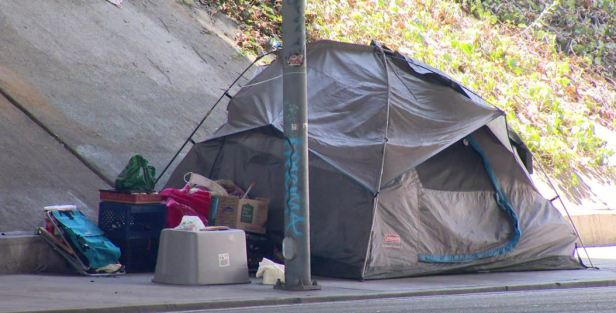 photo credit: KRCB News
 The number of people experiencing homelessness in Sonoma County — at least among adults counted in the county’s preliminary 2026 Point‑in‑Time Count— remained essentially unchanged from last year. But youth homelessness rose 46 percent.
KRCB’s Shandra Back speaks with Sonoma County Health Services Director Nolan Sullivan about why he believes the county’s homelessness support systems may not be able to maintain that stability as major budget cuts loom.
KRCB: The biggest number I'm seeing right now is the 23%, maintaining flat for the second year. What would you say the main thing is that kept that number flat?
SULLIVAN: That was one of the biggest decreases we've seen in the last decade or so the year prior, right? So that was a bit of an anomaly. Some of that was a lot of different work and the accumulation of many projects that kinda came online all at the same time. We were able to produce about 401 new units of various types of housing, which I think really led to that 23%.
And I think honestly, I was a little bit shocked that we even stayed flat, to be frank. A lot of what we've had available the last five, six, seven years really is sort of drying up.
And so we're having some very hard discussions right now on federal funding and really working through that process. I think the secret sauce there really is that we have a group of nonprofits, the county, and providers that are all working together. The community right now is uber-focused on preservation.
We're communicating. We're sharing. Certain groups are actually giving up beds or projects so other groups can keep their beds or projects. I think we're all working really well together, which you don't often see in these settings.
But, honestly, with the city funding loss, county budgets, the state budget in the tank, and the federal changes that are coming, I am still sort of shocked that we even just maintained, and I suspect we'll see an increase in unsheltered and sheltered homelessness most likely.
KRCB: Against all of these challenges, what is it then that's keeping this number pretty consistent from last year?
SULLIVAN: I think it's sort of the holdover effect, right? The lingering, aftereffect of all of the different funding and there were a lot of projects that were funded a couple years prior that finally came online or were able to add a few more units.
So it really is like the tail end of the heyday. And I think that that line of supercharging has sort of run out. We're really looking at a significant funding loss across the entire system. I think, unfortunately, the party is over.
We're looking at gearing up studies now for '25, '26 and projections for '26, '27. But even just between '23, '24 and '24, '25, it was almost a 50% reduction in available funds to address homelessness.
KRCB: The stat that stands out the most for me is the youth homelessness rising 46%. Can you speak a little bit to that?
SULLIVAN: I mean, we had a major service provider on the youth space go out of business over the last two or three years, and that really is the direct driver there. When you have one provider kind of go out of the ecosystem, those beds are critical and so we have been sort of rapidly trying to stand up an alternate option.
KRCB: Is there anything else that you want to add to the conversation today
SULLIVAN: It's one of the top two or three concerns I have going forward, right? We've made a lot of progress here. Homelessness is way down from where it was 10 or 15 years ago. 23% reduction is huge. I just am nervous that all those gains will be reversed over the next couple of years. There's just no way that we will continue to make the progress we've made in the past, and hopefully it's a wake-up call for everybody.

 NPR
NPR Spotify